
Two tools from Atomicdust to help you plan your brand architecture.
Same eight questions either way, and the same report at the end. Talk to it, or type.

Talk To An AI Strategist
Ten Minutes, Out Loud (Beta)
Tell our AI agent about the brand you are bringing on. It asks what a strategist would ask, draws all four structures on screen using your real names as you answer, and recommends one at the end.
Voice sessions are recorded so we can build your report and send it over.
Fill It Out Yourself
Eight Questions, About Ten Minutes
The same eight questions, answered at your own pace. You get the same recommendation, the same four structures with your names on them, and a report you can share with your team.
Brand architecture is how a company with multiple products, services or brands is structured, and how those parts relate to each other and are presented to the customer. A healthy brand architecture creates clear distinctions among a company’s various parts and works to support and strengthen the entire brand.
Most brand architecture falls into one of four structures.
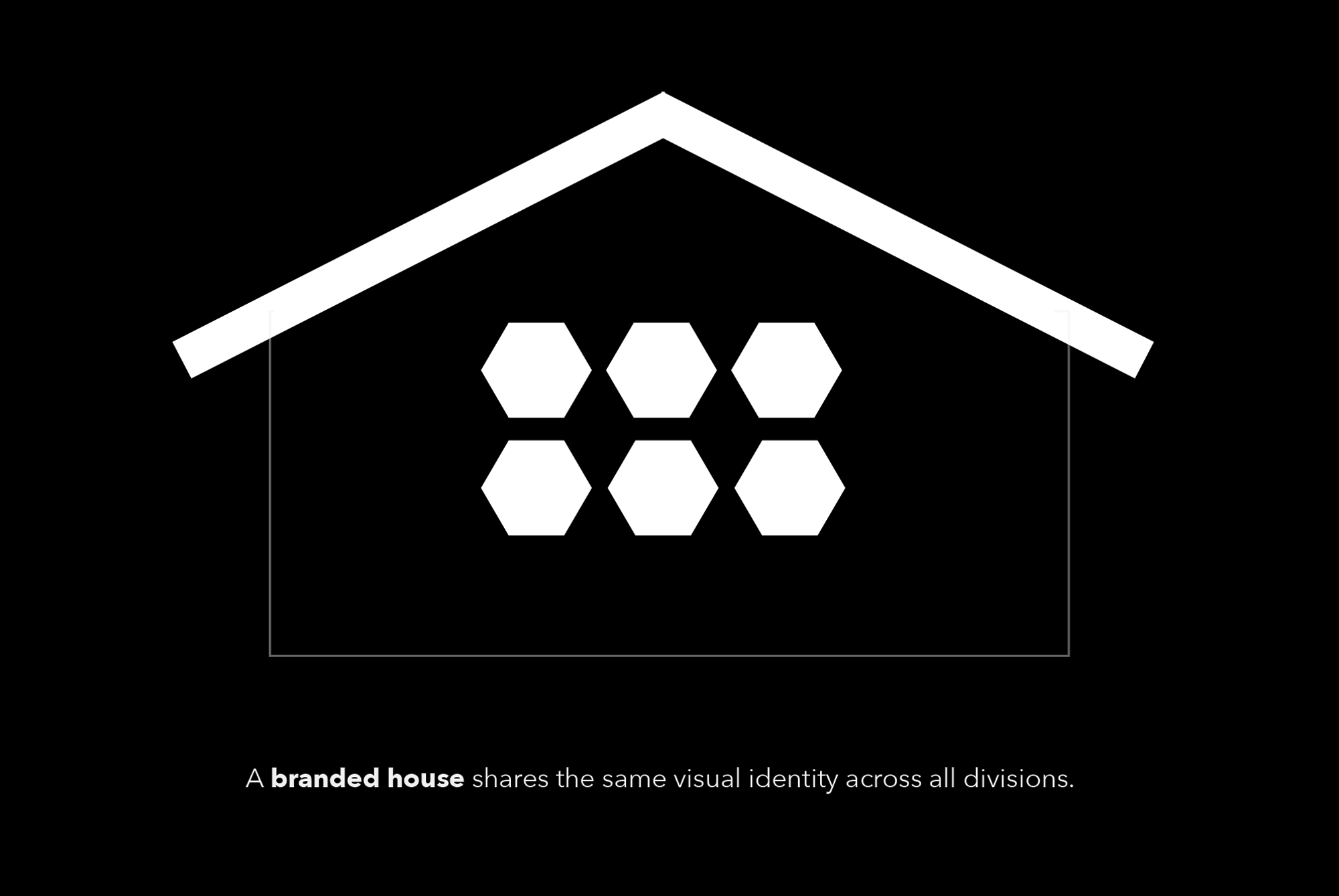
I
The Branded House
Every segment carries the parent name. Reputation compounds into one brand, and each part benefits from the trust the others earned. The risk is confusion when the businesses are genuinely different.
In practice: FedEx Ground, FedEx Freight and FedEx Office.
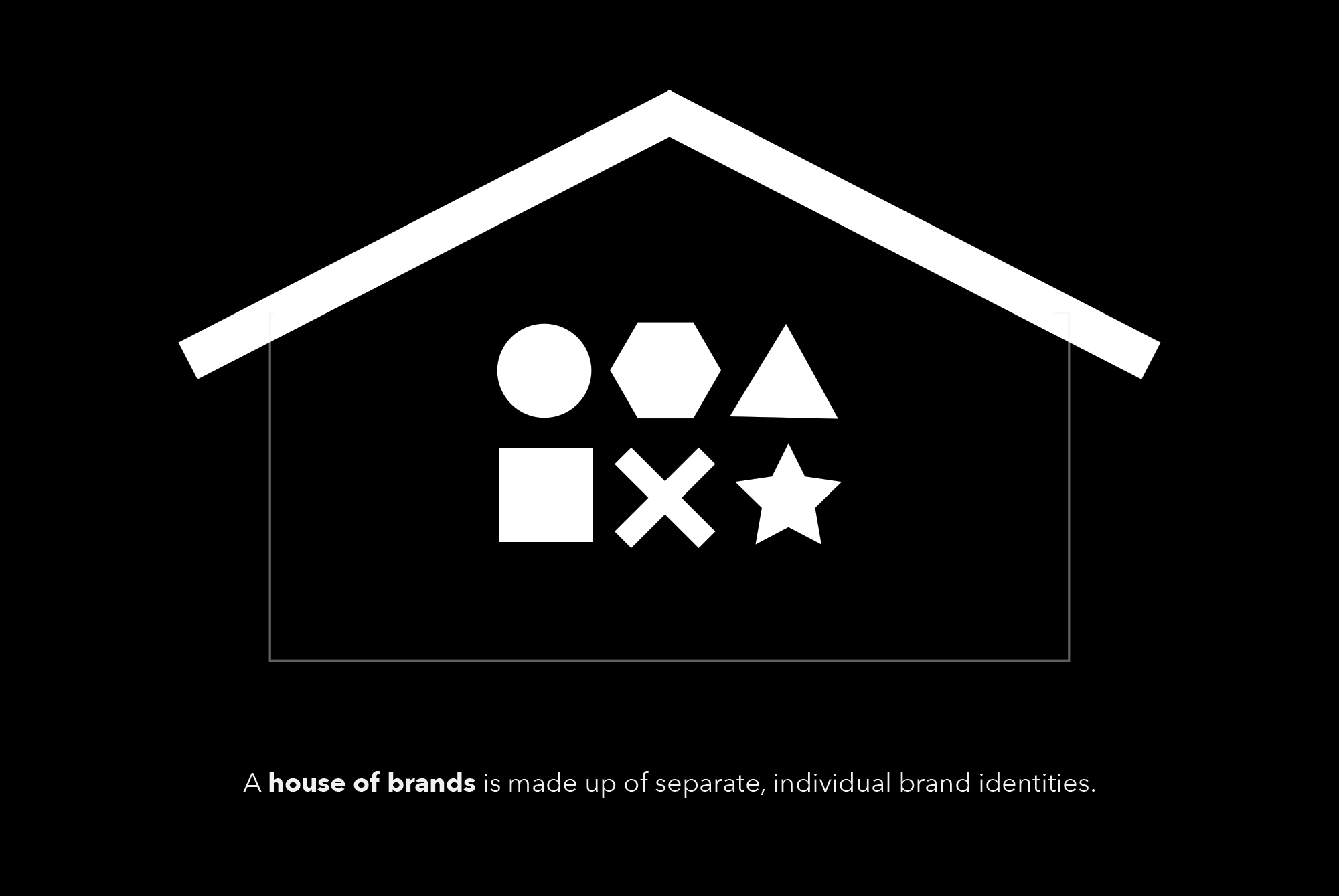
II
The House of Brands
Each business stands on its own name and can mean something different to a different buyer. Acquisitions need no rebrand, but you fund every brand separately and loyalty never transfers.
In practice: Procter & Gamble behind Tide, Pampers and Gillette.
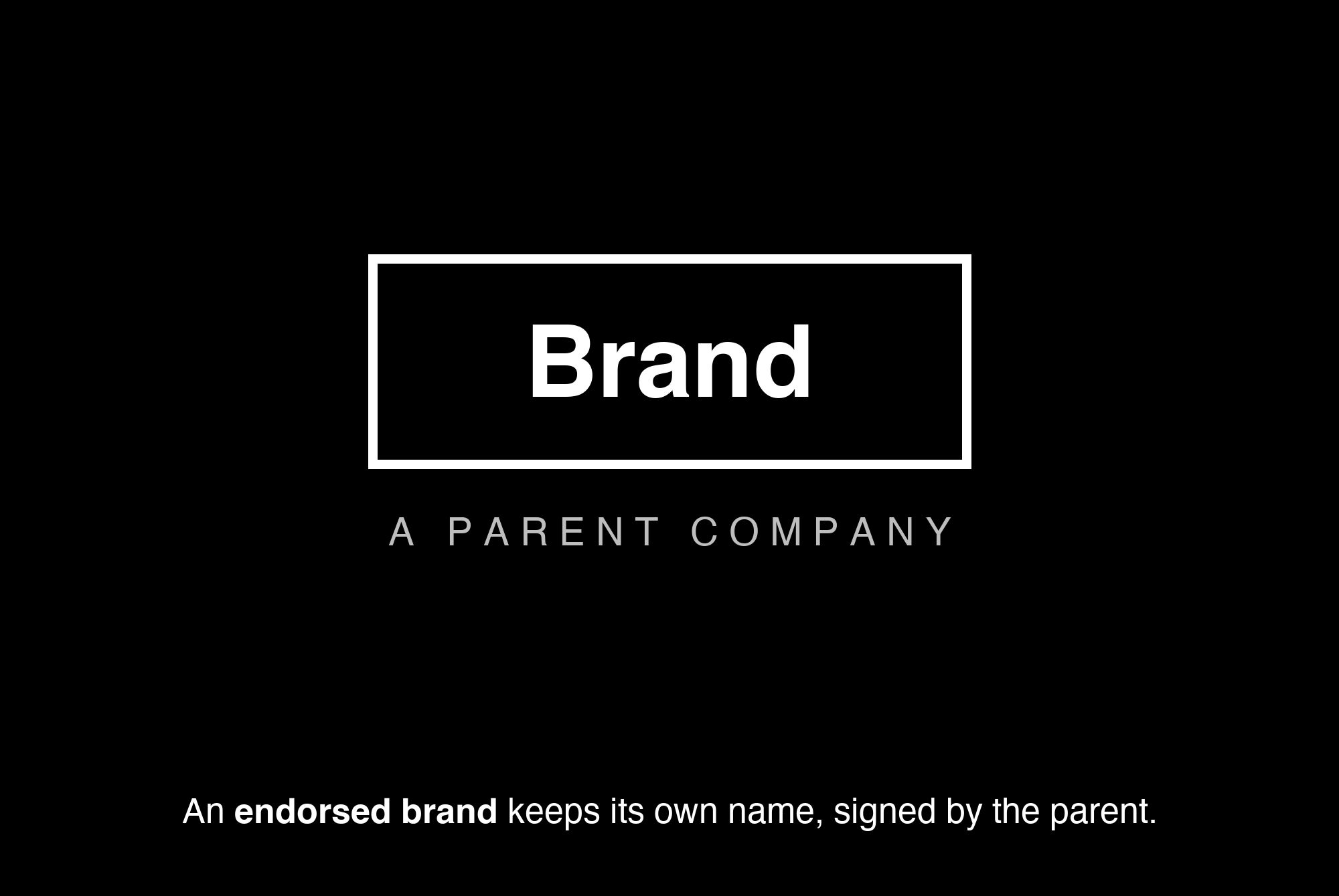
III
The Endorsed Brand
The business keeps the name people already trust while the parent signs the back of the jersey. It works when a company is known but not yet fully trusted, and it lets you market to different audiences without starting from zero.
In practice: Courtyard by Marriott, Residence Inn by Marriott.
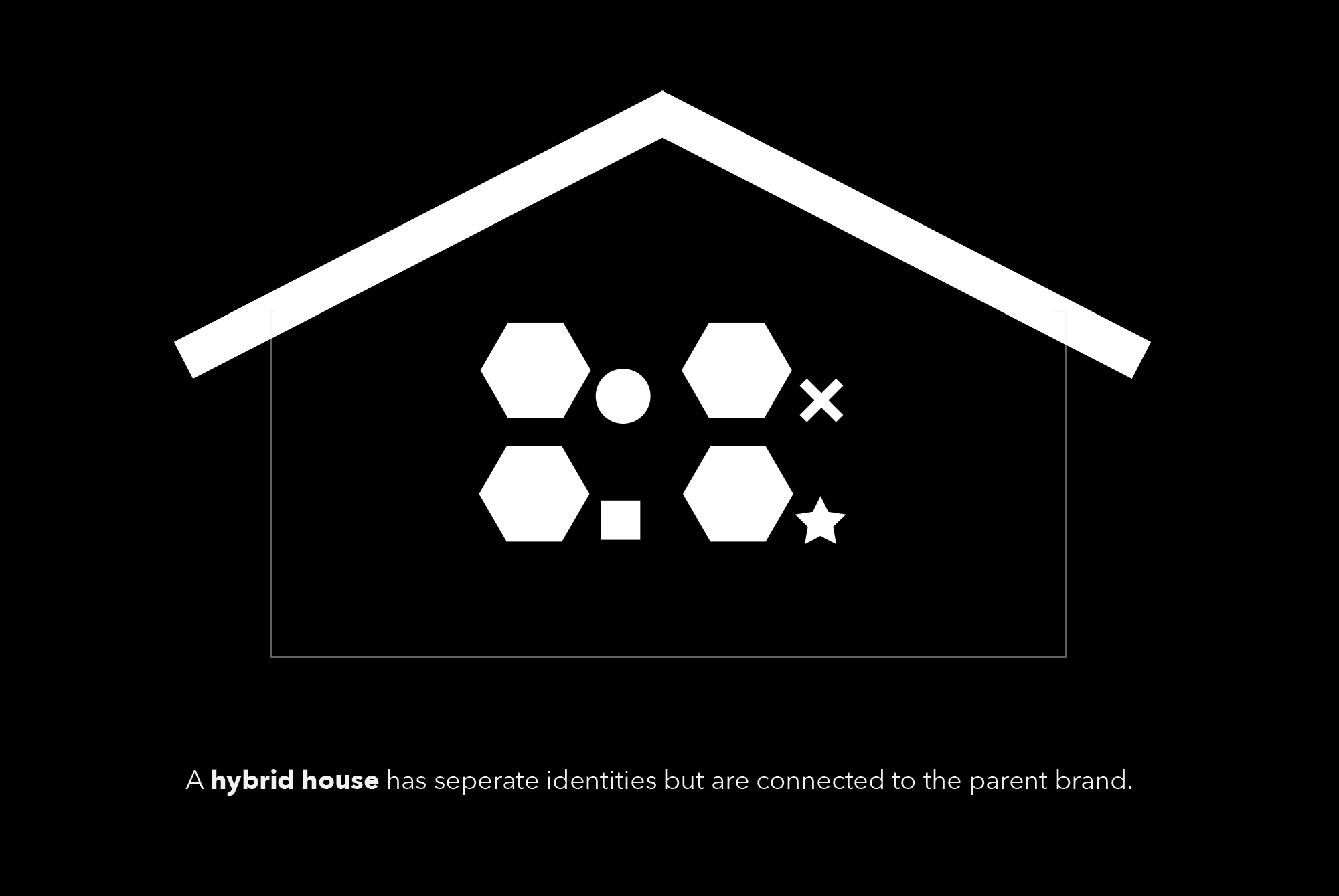
IV
The Hybrid
Protect the one name worth protecting and stop paying for the ones that are not earning their keep. The most common structure in practice, and the one that needs a written rule or it drifts.
In practice: Alphabet keeps Google prominent and holds the rest at arm’s length.
Putting Brand Architecture to Work
A clear brand architecture can help you communicate your story to both your customers and your team. Understanding how your company relates to all of its parts will help you focus your marketing on the perfect customers for each product, service or sub-brand. Sometimes you’ll use the strength of your entire brand to show how each section works together for your customers’ benefit, while other situations will call for separating your brand segments to avoid confusing your customers and eroding their perception of your brand.
Atomicdust builds strategic brand architecture
We are usually called in around a merger, an acquisition or a stretch of growth that outran the name on the building. Sometimes it is a positioning problem wearing an architecture costume. Either way, it is core to our work as a B2B branding agency.
Through our branding program we learn how your current structure actually works, decide which of the four fits where you are going, and write the rule so the next decision does not start from scratch.

When it becomes a decision
Nobody redraws brand architecture for fun.
The question almost always arrives attached to something else. You bought a company and now you own two names that mean the same thing to different people. You have grown into three service lines that no longer sit comfortably under the name on the building. A founder is leaving and their name is on the door. An investor asked why the portfolio looks like seven unrelated businesses.
In every one of those cases the real question is the same: how much of the equity you already paid for do you keep, and how much do you fold into the parent brand. Get it wrong in one direction and you spend years funding a name nobody asks for. Get it wrong in the other and you delete demand that took a decade to build.
The cost of the decision is rarely the rebrand itself. It is the migration underneath it: contracts, search traffic, technicians who introduce themselves by the old name and the three biggest customers who only ever trusted the founder. Those are worth listing before anyone opens a design file.
Acquisitions and roll-ups
Most brand architecture questions arrive with a purchase agreement.
Buy a company and you buy its name, its customers and whatever those customers believe about it. The deal model rarely says what happens to that name. Somebody decides later, usually under time pressure, often by default. Doing nothing is a decision too, and it is the one that quietly funds two marketing budgets forever.
The roll-up problem
One acquisition is a decision. Six is a system. Serial acquirers and platform companies end up holding a shelf of names that were never meant to sit together, each with its own website, its own reputation and its own loyal customers who have no idea the others exist.
The companies that handle this well decide the rule before the next deal closes, not after. What earns a standalone name, what gets endorsed, what gets absorbed, and who signs off. Without that rule every acquisition becomes its own argument, and the answer usually goes to whoever feels most strongly in the room.
What it costs to get wrong
Fold in a name customers still search for and you delete demand that took a decade to build. Keep a name you cannot afford to market and it goes quiet, which looks the same to a buyer as going away. Neither shows up in the deal model, and both show up in the pipeline about eighteen months later.
The rebrand itself is rarely the expensive part. The migration underneath it is: contracts, search traffic, sales collateral, the tech stack, and the sales team learning a new answer to a question they have answered the same way for years.
When to decide
Before close is better than after. During diligence you can still price the answer, and a name with real equity is worth protecting in the terms rather than discovering afterwards. After close the decision gets made anyway, just with less leverage and more people watching.
If you are working through this now, the tools at the top of this page will get you to a defensible answer in about ten minutes. If you would rather talk it through with a person who has done it before, that is what we are here for.
Free tool
Make the call.
Eight questions, about ten minutes. They cover equity, permission, customers, risk, culture, strategy, budget and endgame, scored against the four standard plays. You get the call and a confidence read, plus the full play, the watch list and the reasoning trace when you unlock the complete decision.
Built for acquirers, holdcos and anyone running more than one brand. Answer for one specific acquisition — run it again for the next one.
Weighing the call…
Unlock the full decision.
The play with the reasoning shown, the watch list of what could make this the wrong call and your answer trace — plus a print-ready version for the deal file. Instant, on this page.
Scoring is automated and weighted against the four standard architecture plays. Results reflect a limited, automated review and do not constitute a comprehensive brand audit or professional advice. For a complete assessment, talk to us.
Brand Architecture FAQs
The ones we hear most.
Brand architecture is how a company with more than one product, service or business is organized and named, and how those parts relate to each other and to the parent brand. It answers a practical question: when a customer meets one part of you, how much of the rest of you comes with it. Most structures fall into a branded house, a house of brands or an endorsed hybrid.
Three, with a fourth that is really a transition. A branded house puts everything under one name, like FedEx. A house of brands keeps the businesses separate from the parent and from each other, the way most large consumer companies operate. An endorsed or hybrid brand lets each business keep its own identity while the parent signs the back of the jersey. The fourth is co-branding during a transition, where two names run together for a fixed period before one retires.
Neither, and the honest answer depends on one thing: permission. Does your parent brand carry believable authority in the category the other business plays in? If it does, a branded house compounds every dollar of reputation into one name. If it does not, putting your name on the front is a marketing expense spent arguing with what people already believe. Permission is the test, not preference.
Usually after an acquisition, during a roll-up, when a founder’s name no longer fits the business, or when growth has produced service lines the original name cannot stretch to cover. A useful trigger: when your own sales team has to explain the relationship between two of your brands before they can explain the offer.
One of four things. It stays standalone, it gets endorsed by the parent, it co-brands for a set period and then retires, or it folds in immediately. The right answer turns on how much equity the acquired name actually holds with buyers, whether your parent brand is believable in that category, and whether you can fund a second brand properly. The most expensive outcome is the accidental one, where a transition has no announced end date and quietly becomes permanent.
The decision itself is fast once the right people are in a room, often a matter of weeks. The migration is the long part. Contracts, search equity, signage, email domains, sales collateral and customer communication typically run three to twelve months depending on how many businesses are involved. Plan the migration before you announce anything.
More Branding Topics
Explore more branding topics below, and if you’d like to talk about how Atomicdust can build an iconic brand for your business, visit our branding services.
Let’s talk branding.
(It’s pretty much all we talk about anyway.)

Blaise Hart-Schmidt
Director of Marketing & Sales
"*" indicates required fields