Fifteen years is a long time to have the same website.
Our old website did the job. It brought us qualified leads every week, housed two thousand blog posts and case studies and landing pages, and had countless authors and editors and designers contributing along the way.
It survived algorithm shifts, traffic anomalies that wrecked us and ones that boosted us, the HubSpot install, the tracker explosion, the landing pages, Moz and Ahrefs and every other piece of SEO software we ever bolted on to our tech stack. It was a wonderful business tool, and probably the key to our survival for the last 25 years.
So before anything else: thank you to everyone who ever visited our site or contributed to it. What a run.
Fifteen years is ancient in web years. And over those years, we attempted many times to build a new one.
If you’ve ever worked at Atomicdust, you know “our new website” has been an inside joke. We’ve started, scrapped it and started over more times than anyone wants to count. The problem wasn’t the platform. It wasn’t the designers or copywriters or developers. The problem was me. Nothing is ever good enough or cool enough or strategic enough.
I see it, I hate it, I blow it up, I start again.
Typical founder stuff.
But it wasn’t just visuals or copy. Most of my fear was around SEO. We rank really well for a lot of valuable keywords, and there weren’t a lot of places for us to go but down.
Search rankings (and now, mentions in LLMs) are the lifeblood of a small, inbound business. We rely on our SEO and GEO performance to drive business. So our approach had to be surgical. The thing that made it successful this time: the sheer volume of those two thousand pages, which used to be terrifying to touch, became easy to audit and process with AI.
Specifically, Claude.
Here’s what actually changed.
Originally, we built our new site the way we build everything: WordPress and Kadence Blocks. A designer assembles the front-end blocks, a developer comes in for the heavier lifts and support, and we put together JavaScript and GSAP for the animations, housing effects in WPCode, going back and forth on the design.
Then halfway through the build, we scrapped all of it—but not because of me this time.
We stuck with WordPress. We removed our beloved block builder. We went full custom theme and full site editor, all generated by Claude.
The trade-off of this approach that everyone debates is editability.
In the past, a fully custom build meant you lost the ability to edit things yourself, unless you’re a skilled developer. But the speed at which you can now produce a website, and iterate on designs inside that site, made going back to the old way (which really isn’t that old) feel archaic. So we combined Claude desktop with Local (a local server), and built from there.
We fed it our designs. We pointed it at the current site and had it migrate all the content, optimize it for search engines, make everything uniform, make mass changes at scale, add animations, scan for accessibility issues to strive for WCAG 2.2 compliance (you should do this, too, btw), add SEO/GEO schema, hunt for conversion opportunities. We even built a cookie pop-up that’s actually privacy compliant, instead of using the out-of-the-box ones that claim to be but quietly aren’t. A pile of ideas and theories that used to be too expensive, too expert, or just too time consuming to pull off, done easily.
Then something happened that I didn’t expect. Code stopped being the bottleneck. More importantly, it stopped being the excuse for me.
When the old barriers are no longer barriers.
When the technical “We can’t do that,” disappears, you’re left holding the only questions that ever mattered: What are we actually trying to say? Are these the right images to say it? Do the blocks make sense? Is there a rhythm and a pattern someone would recognize? Does this make sense? Is this good? Would anybody care?
That’s the work. That’s what design and branding were always supposed to be about. Strip away the excuse of technical limitation and you’re left with a much harder and more honest prompt: if I can do anything, what should I do?
People throw around the term “AI slop” and dis AI. But code is binary. And the code on our new site isn’t sloppy, it’s genuinely good. Good code has always been just a framework for an idea. The job is to make sure the people bring really good ideas. I think we did.
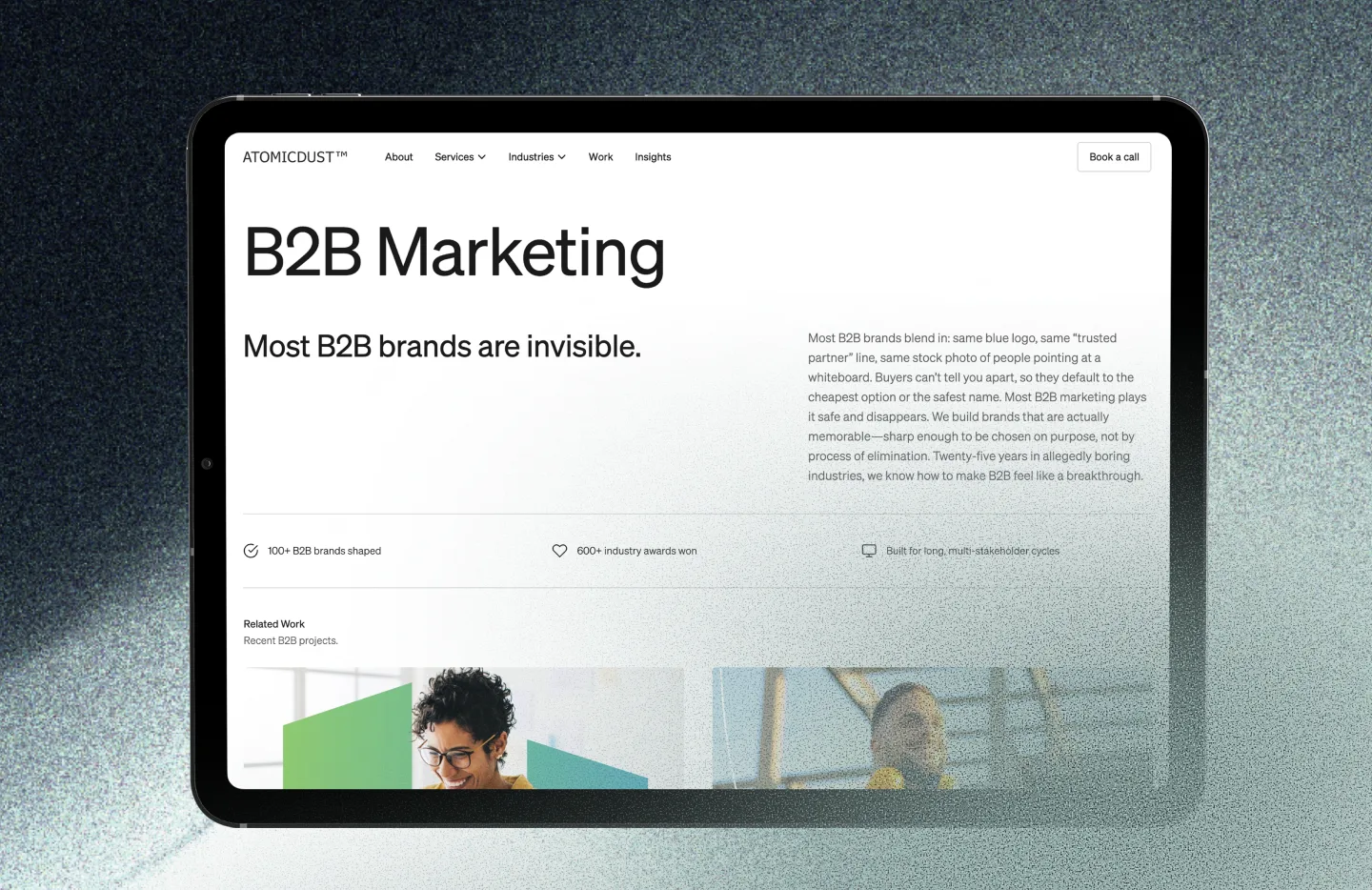
Once we were freed up, the new opportunities kept coming. The site uses CLI, or command line interface, to build out content. Now, we can do things that used to take hours (or that we simply never did) in minutes: Turn a blog post into a work section. Spin off social videos from a project’s images. Build a custom landing page for one prospect who’s interested in one specific thing.
The freedom to freestyle, without the barriers standing in the way.
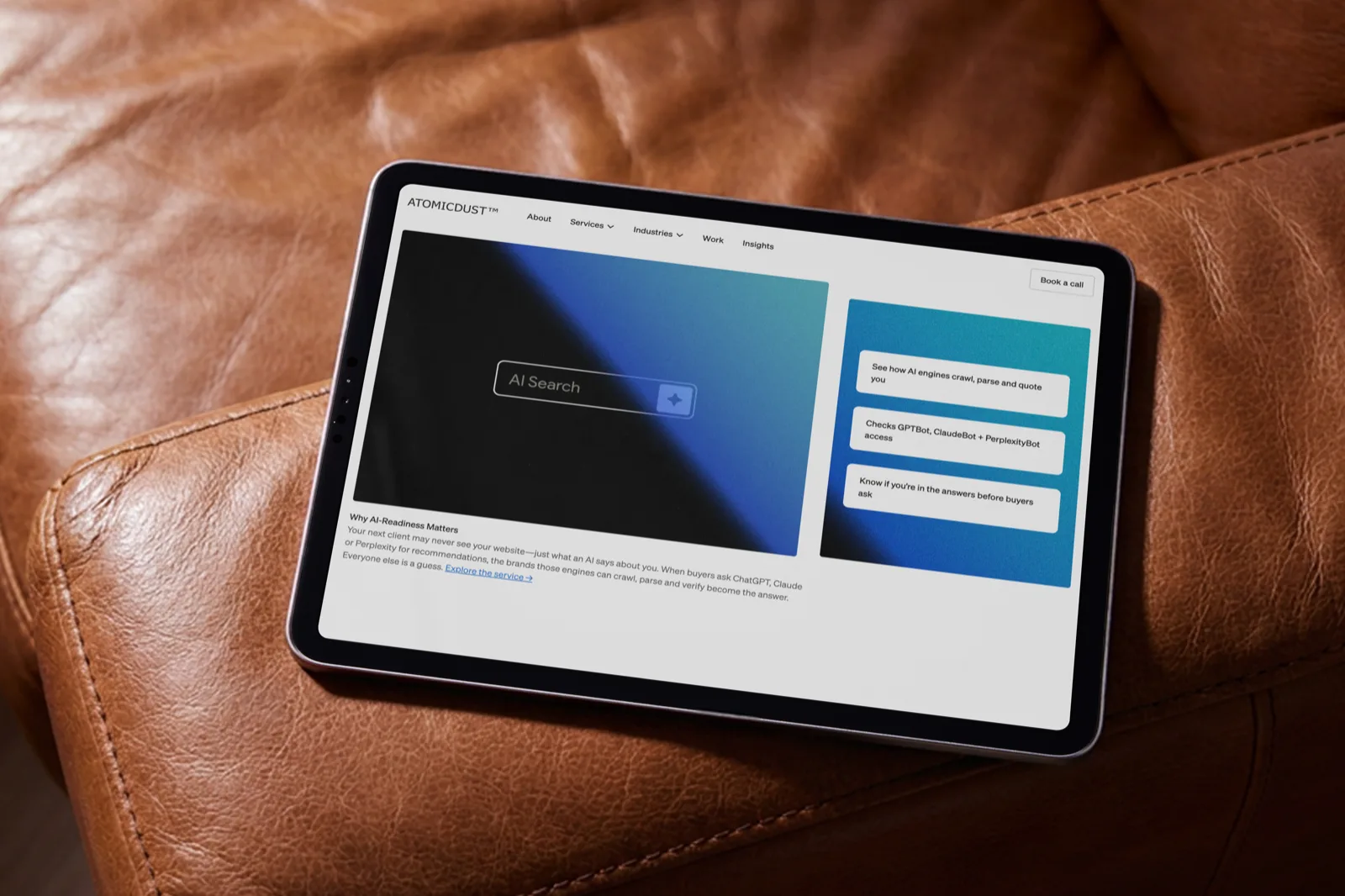
A good example: halfway through, I asked Claude to look at the site and it called me out. Our main call to action was “contact us.” For a company that does marketing, having a single hard ask is weak. We needed a softer, more passive offer for people who aren’t ready to take that step. That feedback turned into twelve custom scanners that create an immediate (and free) audit for site visitors. They check ADA compliance, AI readiness, SEO, brand language. They’re useful to the audience, they generate leads and there’s no maintenance on our end. Which of course made me wonder what else we could build.
So we built an extension that grabs a random project from our portfolio, pulls the images, turns them into a full-motion video, writes a LinkedIn post and publishes it. Set to once a week, no hands. We’ve got the same setup ready for client testimonials. A lot of these tricks I learned building I Am So Board, my side project job listing site that’s powered by automations and scrapers. You learn something on one project and carry it into the next. Thinking this way just makes me better for whatever comes after.
That’s the part that interests me most about this new wave of website technology.
If you think of a website as a brochure with a stack of pretty images, that’s the traditional view. But if you start asking what tools you could make that genuinely help your audience, how you could automate your own job, how you could deliver a little joy to a customer, how you could programmatically push your marketing further… the whole world opens up.
The other day I talked to a friend who runs a site and wanted to think through conversions. Just by approaching it from these new angles of “what if,” we came up with a handful of ideas that can get results but don’t require real work.
Marketing is about to see a big wave of programmatic ideas that make life easier and make customers happier. For years I’ve said marketing is messaging and frequency. Once you craft the core message, now you can use tech to deliver that frequency faster, sharper and cooler than ever.
You just have to think about it a little differently.
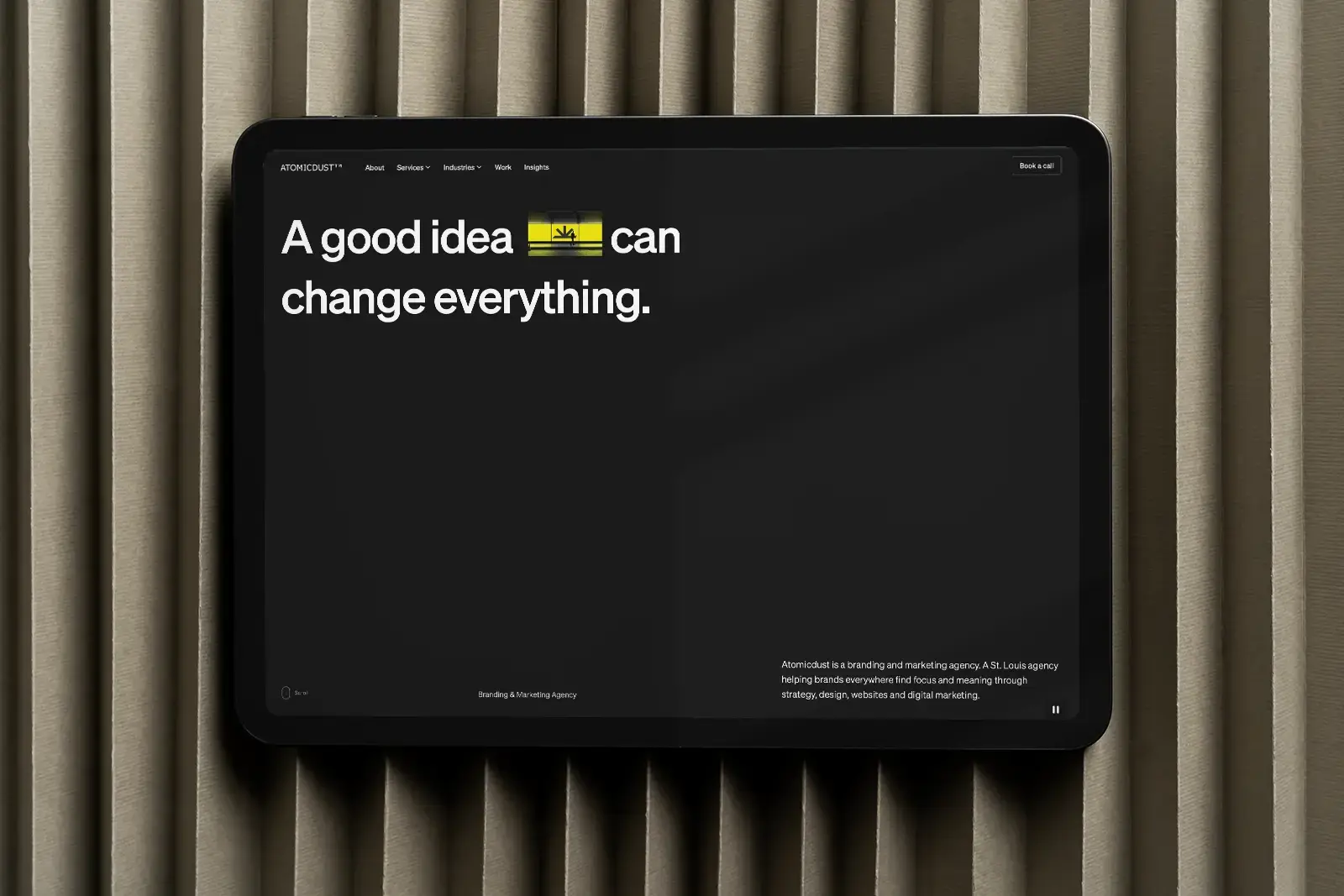
The future of Atomicdust.com
The question we’ve heard most is, “How am I going to edit the new website if it’s built by AI?”
Two ways. You can do it right through Claude with prompts, and anyone on the team can connect and create content. Or you can use the good old regular Gutenberg block editor in WordPress, same as always.
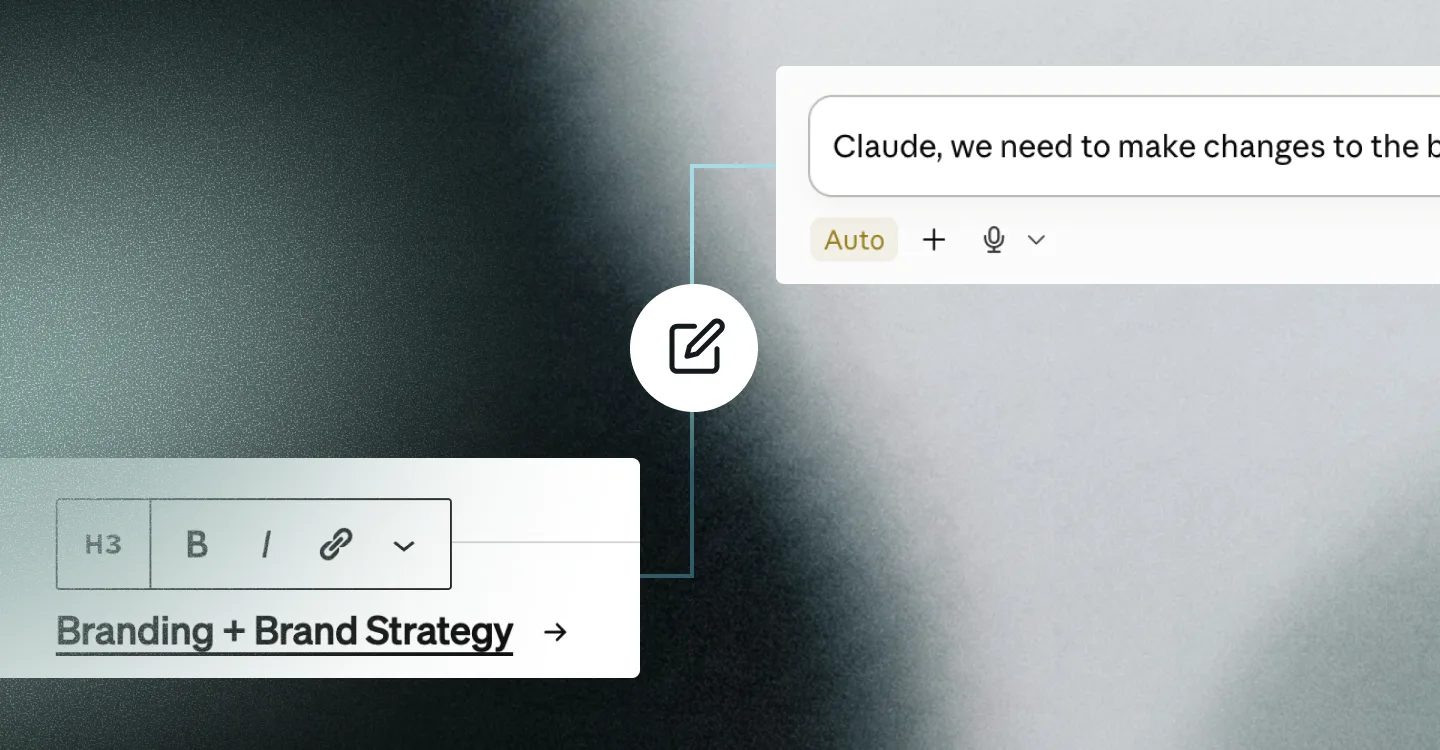
I still think WordPress is a great platform for teams, for security, for content, for the plain fact of working together.
The new site is full of motion and video. I’ve already gotten feedback that it might be too much. That feedback came from my 79-year-old father.
The site is really about publishing as a team, using it to generate new business and expressing culture. On those counts, I think it works.
So, do you need agencies to build websites anymore?
Lately, my friends look at me with their head cocked, full of pity and ask how business is. “Is AI killing your company?” “You guys going to be okay?”
Maybe it is for some. Maybe it will be someday. But right now it’s been a superpower, letting us solve problems we were never able to solve before, faster than we ever thought possible. Creativity in how you use these tools is the real advantage, and it’s an advantage designers are built to bring.
Here’s the other truth: AI sped up the coding process for our new site, but it drastically increased the QA time. A lot of the project was spent reviewing, reading and testing, over and over again, to make sure everything was ready to ship.
Also: we knew what we were doing. Our team knows all the pieces and parts and concepts of how to build a great website. We were definitely, specifically steering the ship with every phase. It wasn’t like we just prompted “Build me a new website and launch it.” It still took us months. Claude was just a new member of the team.
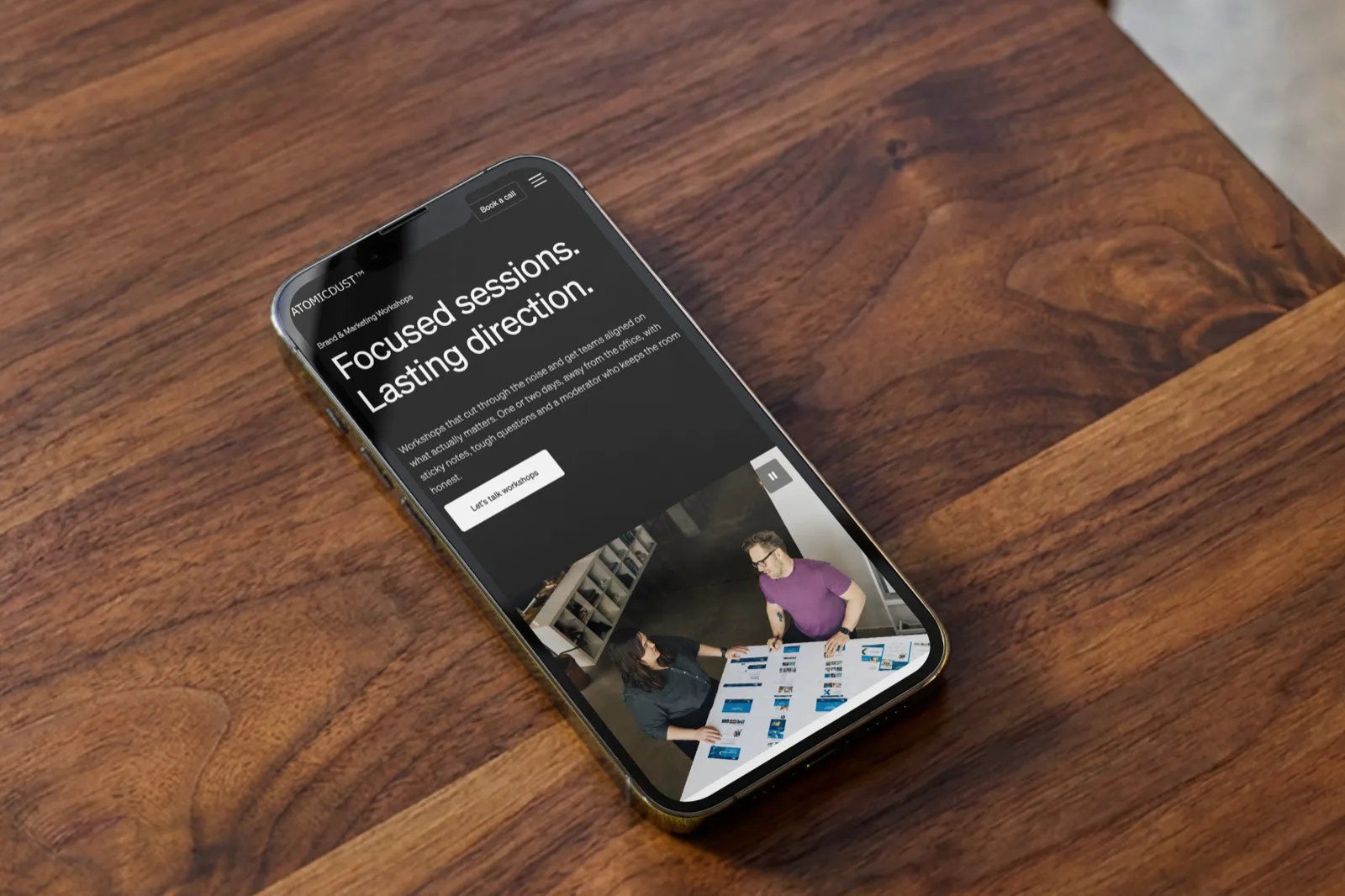
The process of building our new website was a tedious, ego-searching mind bend. It was also great, because it taught me to use the same thinking and the same tactics on everything that comes next.
I’m happy with how it turned out. I’m more excited about the next project, and how to keep compounding what we’ve learned into getting results for clients—and building more cool stuff in the world.
Thanks for visiting the old site. I hope you like the new one. And if you’ve been waiting for permission to completely rethink how you build, here’s your sign.